Universiti Teknologi MARA Cawangan Pulau Pinang | Kampus Permatang Pauh
Programme Code: EE212
Engineering Degree

BACHELOR OF ELECTRICAL AND ELECTRONIC ENGINEERING WITH HONOURS

Program Code: EE212 | Faculty of Electrical Engineering

UPU Code: UE6522002

“Empowering Future Engineers, Shaping a Sustainable Tomorrow.”

⏱️
4 Years
Duration of Study
📚
8 Semesters
Full-Time Roadmap
🎓
Engineering
Honours Degree
⚡
EE212
Programme Code
🏛️
UiTM
Permatang Pauh

About the Programme

Developing competent, professional, and ethically grounded electrical engineers for global industry.

Programme Overview

The Bachelor of Electrical and Electronic Engineering with Honours (EE212) provides students with a broad foundation in electrical and electronic engineering together with opportunities to develop specialised knowledge and practical engineering skills

Vision & Mission

UiTM Vision: A premier university driving Professional Bumiputera

UiTM Mission: To elevate knowledge, 'adab' (ethics and virtues), and expertise in fostering an entrepreneurial spirit through advanced curricula, talent development, impactful research, and industry synergy, contributing to the nation’s prosperity and global well-being

Programme Educational Objectives (PEOs)

  • PEO 1: Demonstrate a broad level of knowledge, competency and practical skills, including digital and numeracy skills in electrical and electronics engineering practices.
  • PEO 2: Demonstrate good communication and interpersonal skills, including digital literacy, with consideration of sustainability in engineering practices.
  • PEO 3: Demonstrate personal skills that emphasis flexibility and adaptability as well as lifelong learning and entrepreneurial mindset.

Programme Outcomes (11 POs)

Expand cards below to view Washington Accord-aligned outcomes:

PO1 - Engineering Knowledge ▼
Apply knowledge of mathematics, natural science, computing and engineering fundamentals, and an engineering specialisation as specified in WK1 to WK4, respectively, to analyse and develop solutions to complex electrical/electronic engineering problems.
PO2 - Problem Analysis ▼
Identify, assess, research literature, and analyse and formulate complex electrical/electronic engineering problems in reaching substantiated conclusions using first principles of mathematics, natural sciences and engineering sciences with holistic considerations for sustainable development (WK1 to WK4).
PO3 - Design/Development of Solutions ▼
Design creative solutions for solving complex electrical/electronic engineering problems and design systems, components or processes to meet identified needs with appropriate consideration for public health and safety, whole-life cost, net zero carbon as well as resource, cultural, societal, and environmental considerations as required (WK5)
PO4 - Investigation ▼
Conduct investigations of complex electrical/electronic engineering problems using research methods, including research-based knowledge, design of experiments, analysis and interpretation of data, and synthesis of information to provide valid conclusions (WK8).
PO5 - Modern Tool Usage ▼
Create, select and apply/perform while recognising limitations of appropriate techniques, resources, and modern engineering and IT tools, including prediction and modelling, to complex electrical/electronic engineering problems (WK2 and WK6).
PO6 - The Engineer & The World ▼
Analyse and evaluate solutions for complex engineering problems while accommodating the needs of sustainable development to society, the economy, sustainability, health and safety, legal frameworks, and the environment (WK1, WK5, and WK7).
PO7 - Ethics ▼
Apply and evaluate ethical principles, commit to professional ethics and norms of engineering practices and adhere to relevant national and international laws while adopting diversity and inclusion (WK9).
PO8 - Individual & Teamwork ▼
Function effectively as individuals, and as members or leaders in diverse and inclusive teams and in multi-disciplinary, face-to-face, remote and distributed settings (WK9).
PO9 - Communication ▼
Assume responsibility to communicate effectively and inclusively on complex engineering activities with the engineering community and with society at large, such as being able to comprehend and write effective reports and design documentation, make effective presentations, taking into account cultural, language, and learning differences.
PO10 - Project Management & Finance ▼
Apply and analyse knowledge of engineering management principles and economic decision-making and analyse relevant situations while showing commitment (A3) as a member and leader in a team and managing projects in one’s own work and in multidisciplinary environments.
PO11 - Lifelong Learning ▼
Recognise and elucidate the need for, and have the preparation and ability for i) independent and life-long learning, ii) adaptability and flexibility to new and emerging technologies, and iii) appraise critical thinking in the broadest context of technological change (WK8).

Entry Requirements

Admission criteria for prospective STPM, Matriculation, Diploma, and Foundation graduates.

Standard Admission Qualifications:

  • STPM / Matriculation / PASUM / Asasi UiTM Qualification criteria - CGPA 2.75
  • UiTM Diploma in Electrical Engineering criteria - CGPA 2.5
  • UiTM Diploma in Science criteria - CGPA 2.75
  • Recognized Engineering Diploma criteria - CGPA 3.00
  • MUET Minimum Requirement - Band 2F

Programme Structure

Complete 8-semester curriculum roadmap (135 total credit units).

Semester 1 16 Credits
HBU111Co-Curriculum 11
MAT435Calculus for Engineers3
EEE411Circuit Theory3
ESE411Signals and Systems3
ECM413Basic Communication Engineering3
ECE411Computer Programming3
Semester 2 16 Credits
HBU121Co-Curriculum 21
CTU552Falsafah dan Isu Semasa2
EPO414Basic Power Engineering3
ESE414Basic Instrumentation & Control3
ELE414Electronics3
ECE414Digital Systems 13
EEE415Electrical Engineering Lab 11
Semester 3 17 Credits
HBU131Co-Curriculum 31
CTU554Penghayatan Etika dan Peradaban II2
LLC400English for Oral Presentations2
MAT455Further Calculus for Engineers3
EPO555Electrical Power Utilisation3
ELE511Material & Semiconductor Devices3
EPO556Electronic Drives & Applications3
Semester 4 18 Credits
LLC402English for Report Writing2
MAT575Introduction to Numerical Analysis3
ECM515Electromagnetic Theory3
ECE515Microprocessor Systems3
EPO514Power Electronics3
ELE557Electronic Circuit Analysis & Design3
EEE515Electrical Engineering Lab 21
Semester 5 16 Credits
STA408Statistics for Sciences & Engineering3
EPO554Electrical Machines and Drives3
ESE551Control Systems3
ELE558Digital Design & Computer Architecture3
ECM551Communication Systems Engineering3
EEE525Electrical Engineering Lab 31
Semester 6 15 Credits
TAC401Third Language (Level 1)2
ESE553Digital Signal Processing3
EPO552Power System Analysis3
ELECTIVE 1Specialisation Track Elective 13
ELECTIVEMultidisciplinary Elective3
EEE535Electrical Engineering Lab 41
F
Semester 7 20 Credits
TAC451Third Language (Level 2)2
EEE611Integrated System Design3
EPO616High Voltage Engineering3
ELECTIVE 2Specialisation Track Elective 23
ELECTIVE 3Specialisation Track Elective 33
EEE600Final Year Project 12
EEE655Industrial Training (8 Weeks)4
Semester 8 17 Credits
ENT600Technology Entrepreneurship3
TAC501Third Language (Level 3)2
EEE653Electrical Engineer in Society3
EEE652Selected Industrial Topics2
ELECTIVE 4Specialisation Track Elective 43
EEE650Final Year Project 24

6 Specialisation Areas

Advanced elective tracks tailored for specialized career pathways

⚡

Power Engineering

Focuses on power generation, system operation, renewable energy integration, and smart grid techniques.

Electives:
  • EPO623: Electrical Conversion and Electrical Transportation System
  • EPO624: Artificial Intelligence In Power Quality
  • EPO553: Power System Operation and Control
  • EPO627: Electrical Efficiency and Demand Response
  • EPO638: Clean Energy and Decarbonization
🔬

Electronic Engineering

Focuses on semiconductor physics, full-custom IC design, VLSI system architectures, and nanoelectronics

Electives:
  • ELE556: Integrated Circuit Design
  • ELE614: VLSI System Design
  • ELE615: Semiconductor Fabrication
  • ELE648: CMOS Analogue Integrated Circuit
  • ELE613: Nanotechnology
🤖

System / Control Engineering

Covers industrial instrumentation, robotics, plant process control strategies, and intelligent system design

Electives:
  • ESE554: Industrial Instrumentation
  • ESE616: Industrial Automation and Robotics
  • ESE611: Process Control
  • ESE613: Modern Control Systems and Design
  • ESE614: Intelligent Control Systems
💻

Computer Engineering

Focuses on embedded hardware design, digital image processing, networks, IoT computing, and AI algorithms

Electives:
  • ECE553: Embedded Systems
  • ECE645: Digital Image Processing
  • ECE644: Data Communication and Computer Network
  • ECE640: Mobile and Sensor Computing
  • ECE646: Computational Intelligence
📡

Communication Engineering

Covers microwave antenna design, mobile communications, satellite link architectures, and RF circuits

Electives:
  • ECM642: Antenna Design and Analysis
  • ECM643: Mobile Radio Communications
  • ECM552: Digital Communication System
  • ECM644: Satellite Communication Systems
  • ECM645: Radio Frequency Design
🩺

Biomedical Engineering

Integrates engineering techniques with physiological modeling, medical instruments, imaging, and rehabilitation

Electives:
  • EBM552: Biomedical Modelling and Simulation
  • EBM613: Rehabilitation Engineering
  • EBM612: Medical Instrumentation
  • EBM615: Statistics in Biomedical Engineering
  • EBM611: Medical Imaging

Where Can EE212 Take You?

Broad employability across critical technology, energy, and manufacturing sectors.

Core Engineering Roles

  • Electrical Engineer
  • Electronic Engineer
  • Power Engineer
  • Control & Automation Engineer

Specialized Technical Roles

  • Embedded Systems Engineer
  • Communication Engineer
  • Computer Engineer
  • Instrumentation Engineer

R&D & Management Roles

  • Biomedical Engineer
  • R&D Engineer
  • Engineering Consultant
  • Technical Project Manager

Target Industry Sectors

Energy & Utilities Semiconductor Manufacturing Automation & Robotics Telecommunications Biomedical Technology Oil & Gas Renewable Energy Engineering Consultancy

Quality Assured. Industry Relevant. Professionally Aligned.

Designed to meet the professional accreditation requirements of the Engineering Accreditation Council (EAC) Malaysia and Board of Engineers Malaysia (BEM), adhering to international Washington Accord benchmarks

EAC & BEM Alignment

Curriculum designed around EAC outcome-based frameworks and BEM code of ethics

Industrial Advisory Panel

Continuous review by senior industry leaders to maintain relevance with current market needs.

Continuous Quality Improvement

Systematic CQI mechanisms based on PO/PEO attainment evaluation and external examiner audits.

Faculty & Academic Leadership

Faculty of Electrical Engineering, UiTM Cawangan Pulau Pinang

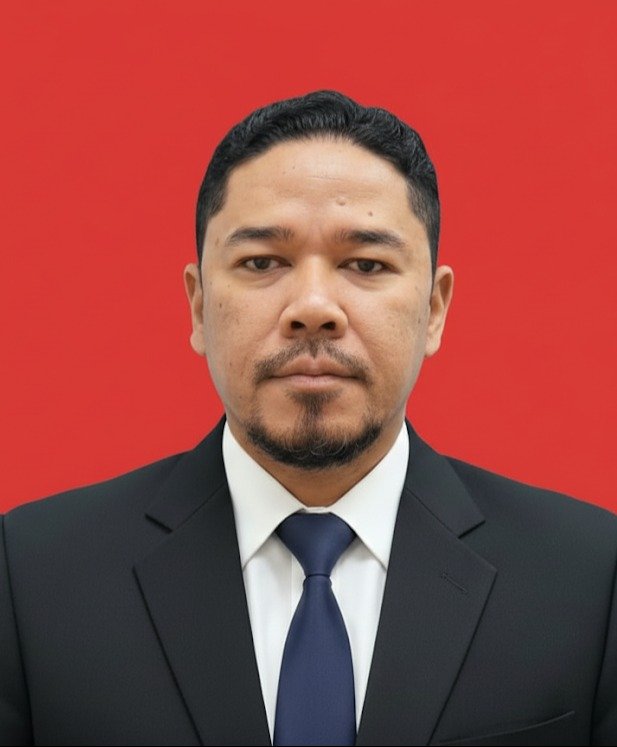
Staff Photo

Head of Electrical Engineering Study

Ir. Dr. Mohamad Faizal bin Abdul Rahman (KPP)

faizal635@uitm.edu.my

Staff Photo

EE212 Program Coordinator

Ir. Ts. Dr. Kamarulazhar bin Daud (KP EE212)

kamarul395@uitm.edu.my

Student Resources Dashboard

Official downloads, guidelines, and administrative regulations

📘

Student Handbook EE212

Complete programme curriculum and course descriptions.

Download PDF
📊

Programme Structure Chart

Visual semester-by-semester prerequisite chart

Download PDF
💼

Industrial Training Guide

Official attachment logbook and evaluation guidelines

Download PDF
🔬

FYP Handbook

Final Year Project proposal, report, and paper formats

Download PDF
📜

Academic Regulations

Peraturan Akademik UiTM (Pindaan 2017) booklet.

Download PDF
❓

Academic FAQs

Course registration, credit limits, and grade policies

View FAQ

Contact Faculty

UiTM Cawangan Pulau Pinang, Kampus Permatang Pauh

Faculty of Electrical Engineering

Address:
Universiti Teknologi MARA Cawangan Pulau Pinang,
Kampus Permatang Pauh, 13500 Permatang Pauh,
Pulau Pinang, Malaysia

Office Hours: Monday – Friday: 8:00 AM – 5:00 PM

↑